Article: What is Cocktail Attire? The Complete Dress Code Guide for Women
What is Cocktail Attire? The Complete Dress Code Guide for Women
An invitation that says cocktail attire is one of the more common dress codes you'll see, and one of the easiest to overthink. It sits in a specific place on the formality scale, and once you know what that place is, getting dressed for the event gets a lot simpler. This guide covers exactly what cocktail attire dress code means for women, what to wear, and how to adjust the look for the occasion in front of you.
Cocktail attire sits in a defined middle ground. It's more polished than semi-formal, which allows for more casual fabrics and shorter silhouettes, and less structured than black tie, which calls for a floor-length gown. Cocktail attire lives between those two points: elevated, celebratory, and still comfortable enough to dance in.
The right look within that range depends on the occasion, the venue, and the time of day. A charity gala and a daytime cocktail reception both fall under the same dress code, yet they call for different fabrics and different levels of polish. This guide walks through each.
A Quick Look at Cocktail Attire
- A knee-length to midi hemline is standard, with ankle-length appropriate for more formal cocktail events.
- Crepe, lace, velvet, satin, Mikado, and sequin all work; cotton, denim, and jersey don't.
- Black, jewel tones, navy, and metallics are all safe choices.
- Pointed or strappy heels are the standard, though block heels and refined flats work depending on the venue.
- A structured clutch and one statement piece of jewelry are usually all you need.
- Skip jeans, sundresses, sneakers, and full-length ball gowns.
What Does Cocktail Attire Mean?
Cocktail attire means a dress that falls between knee-length and midi, in a fabric with some polish to it, worn for something celebratory but not black tie. That's the cocktail attire meaning in its simplest form. The fuller picture comes down to three things working together, hemline, fabric, and occasion.
The term dates back to the 1920s, when the cocktail party first became its own kind of gathering. By the 1950s it had a dress expectation of its own, less formal than eveningwear but a step up from daytime clothes. That history is part of why the dress code still feels a little slippery. It was built to sit between two other codes from the start.
If you're wondering what a cocktail dress specifically refers to, it's the garment itself, knee-length to midi, cut for an evening or early-evening event. Cocktail attire is the wider dress code a cocktail dress fits into, though it leaves room for tailored separates too. If you're picturing something dressed up but not gown-level, you're picturing cocktail attire correctly.
What to Wear for Cocktail Attire
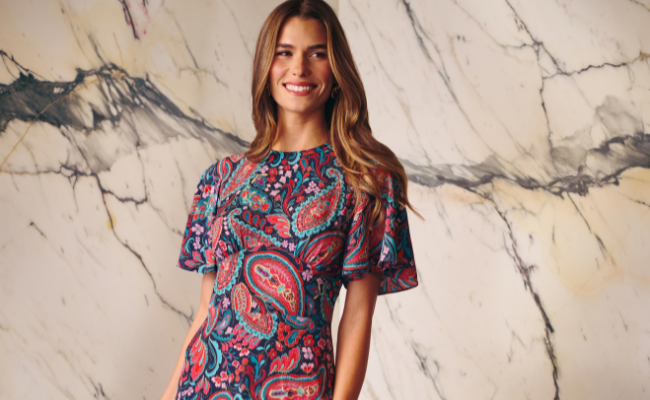
A knee-length to midi dress is a versatile choice for a cocktail event, working across a wide range of occasions. Fabric matters just as much as length here. Crepe, lace, and velvet all read as cocktail-appropriate, while a cotton sundress doesn't, no matter how dressy the cut. If dresses aren't your thing, tailored separates work too, and the cocktail dress collection covers plenty of both.
 |
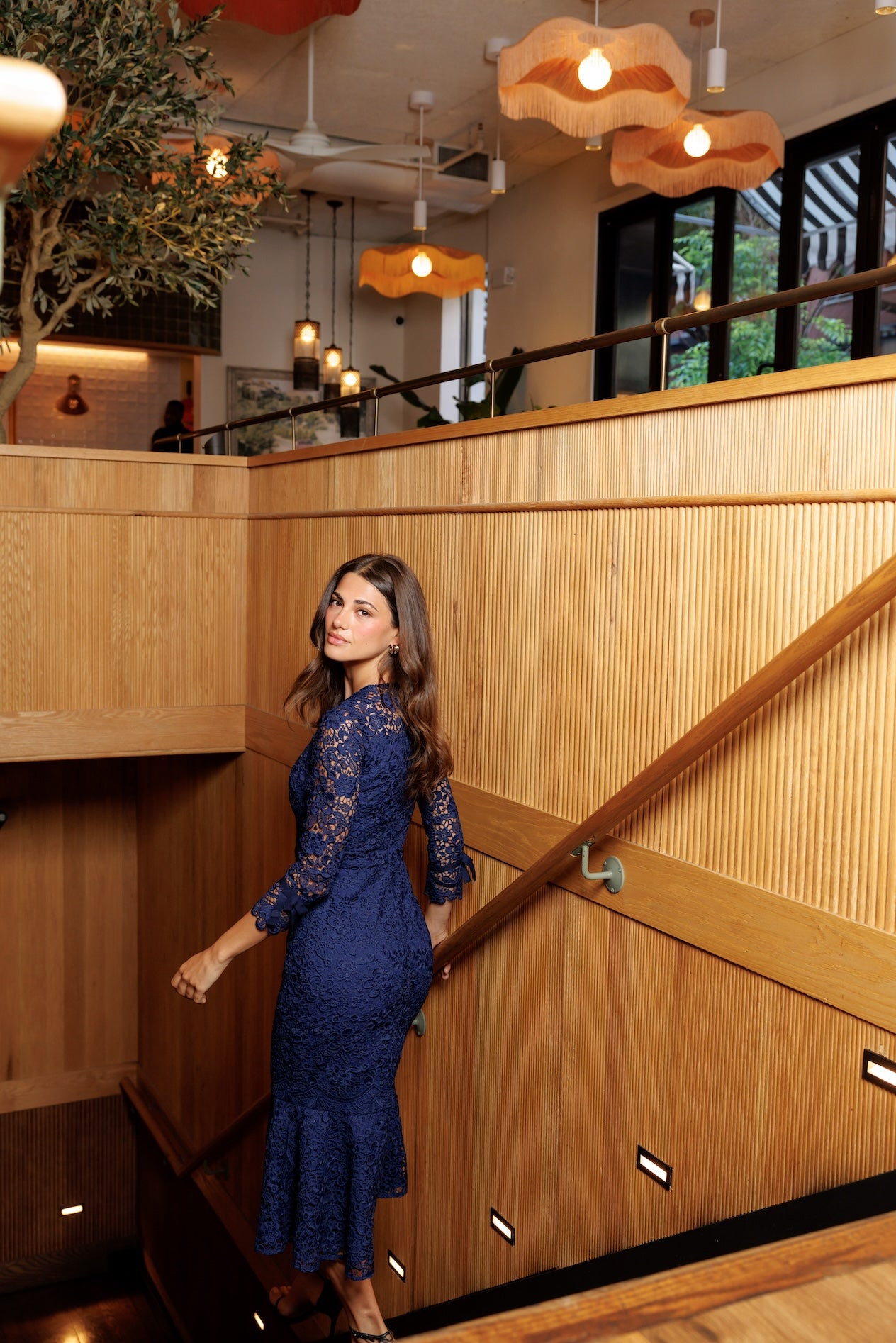
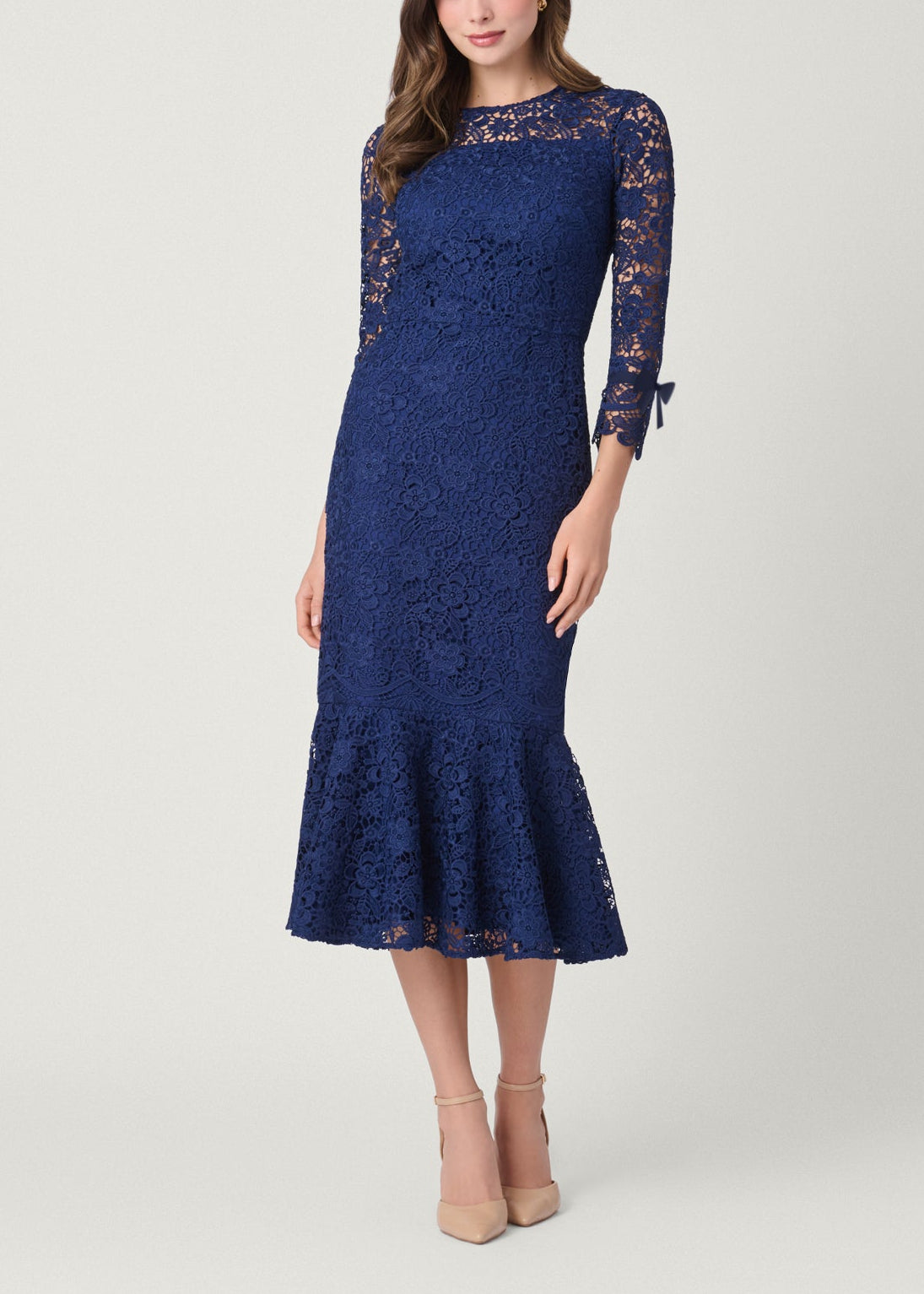
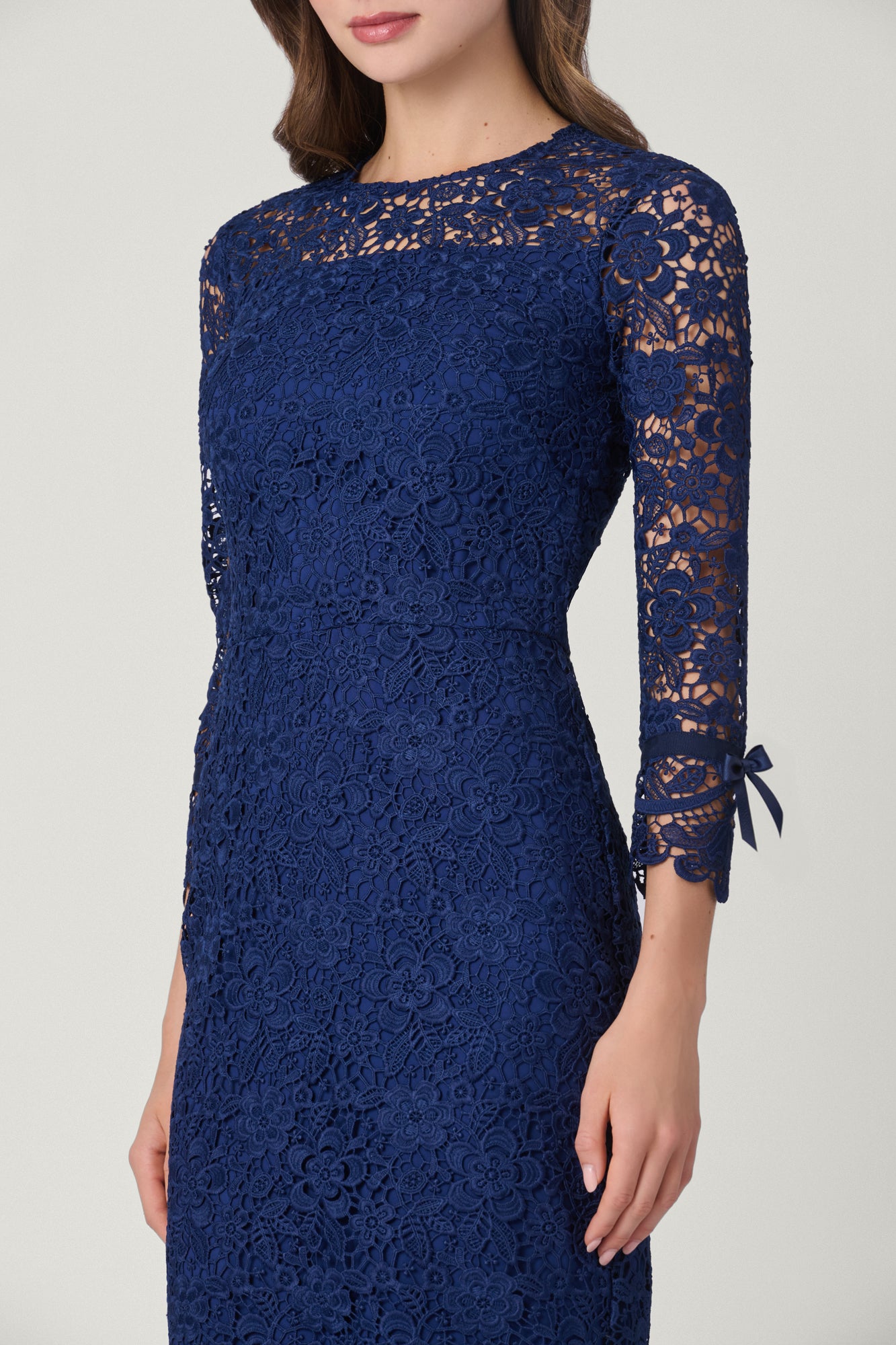
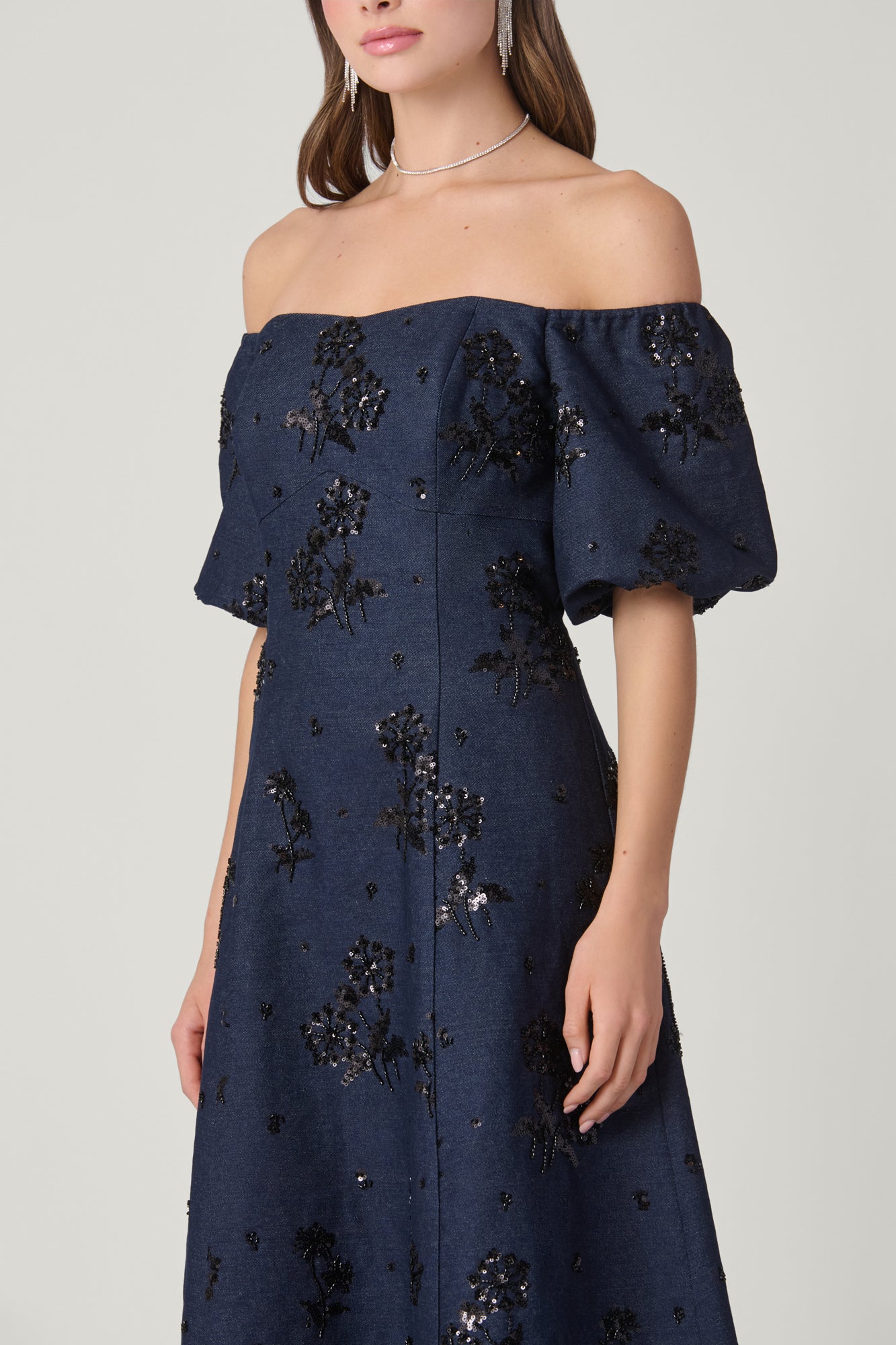
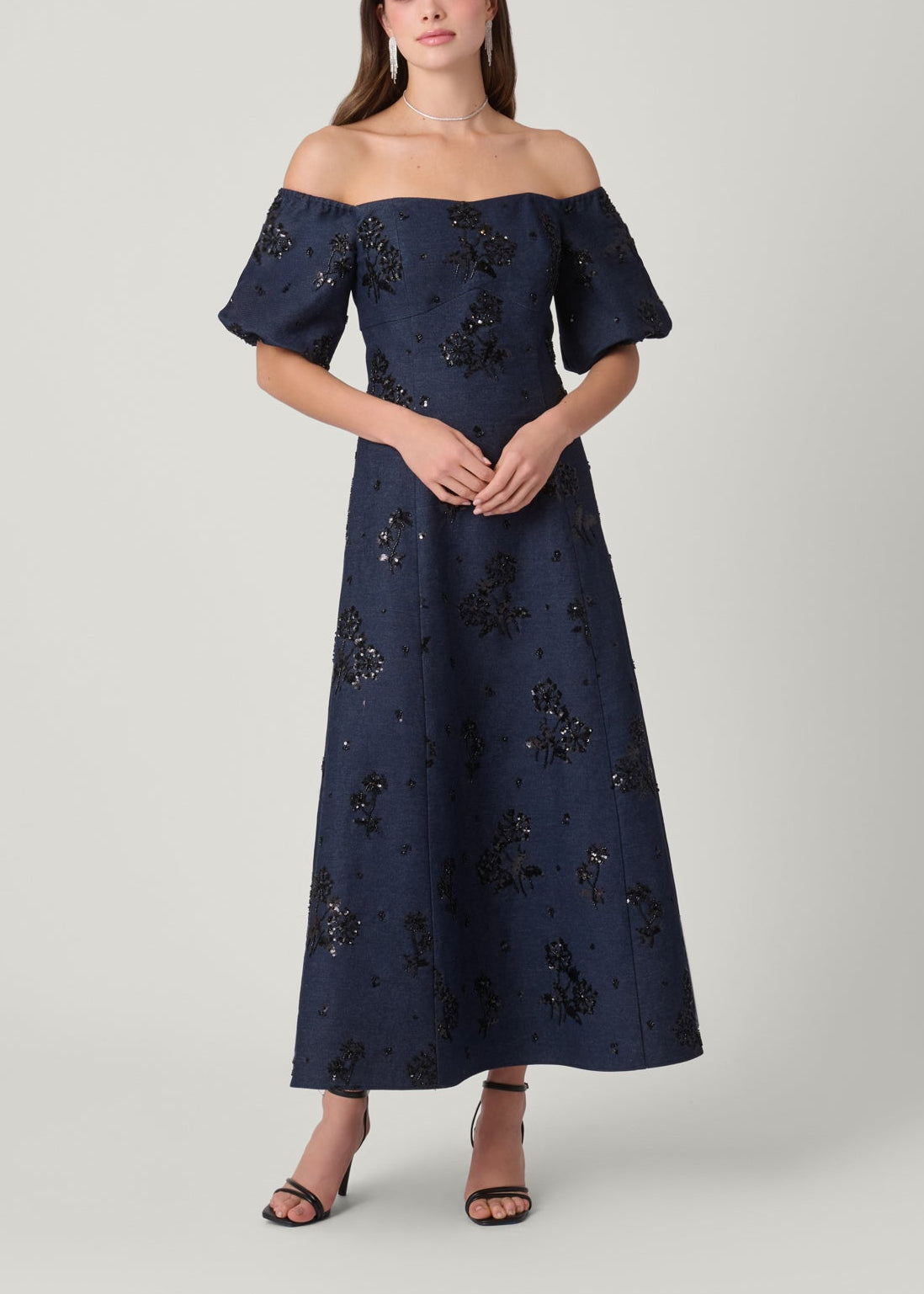
Suzanne Dress in NavyThe Suzanne Dress is a midi-length cocktail dress in floral lace, versatile enough for the full range of cocktail occasions, from a wedding reception to a holiday party. |
 |
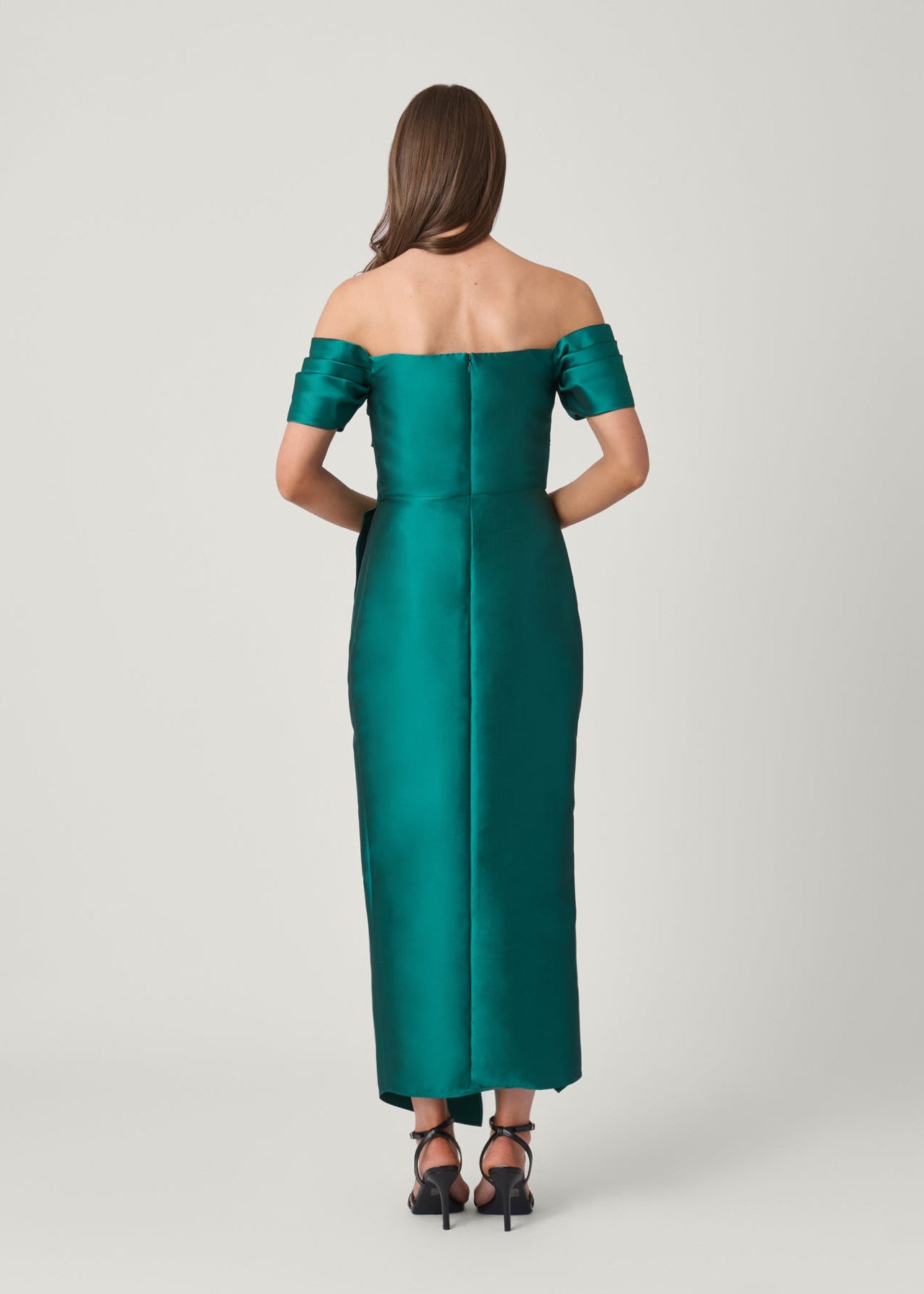
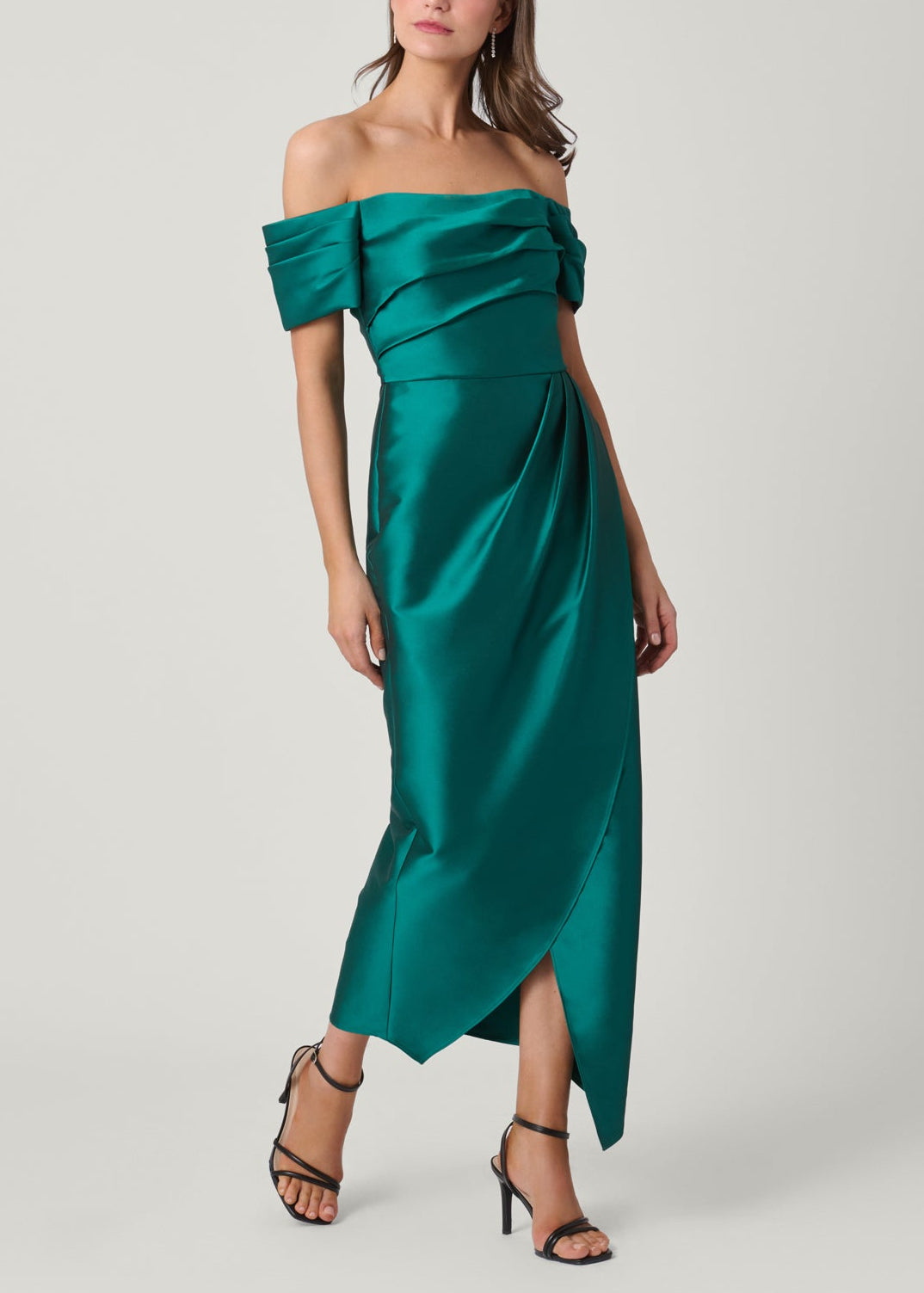
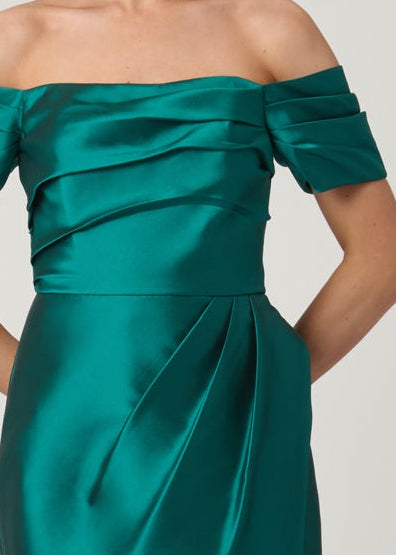
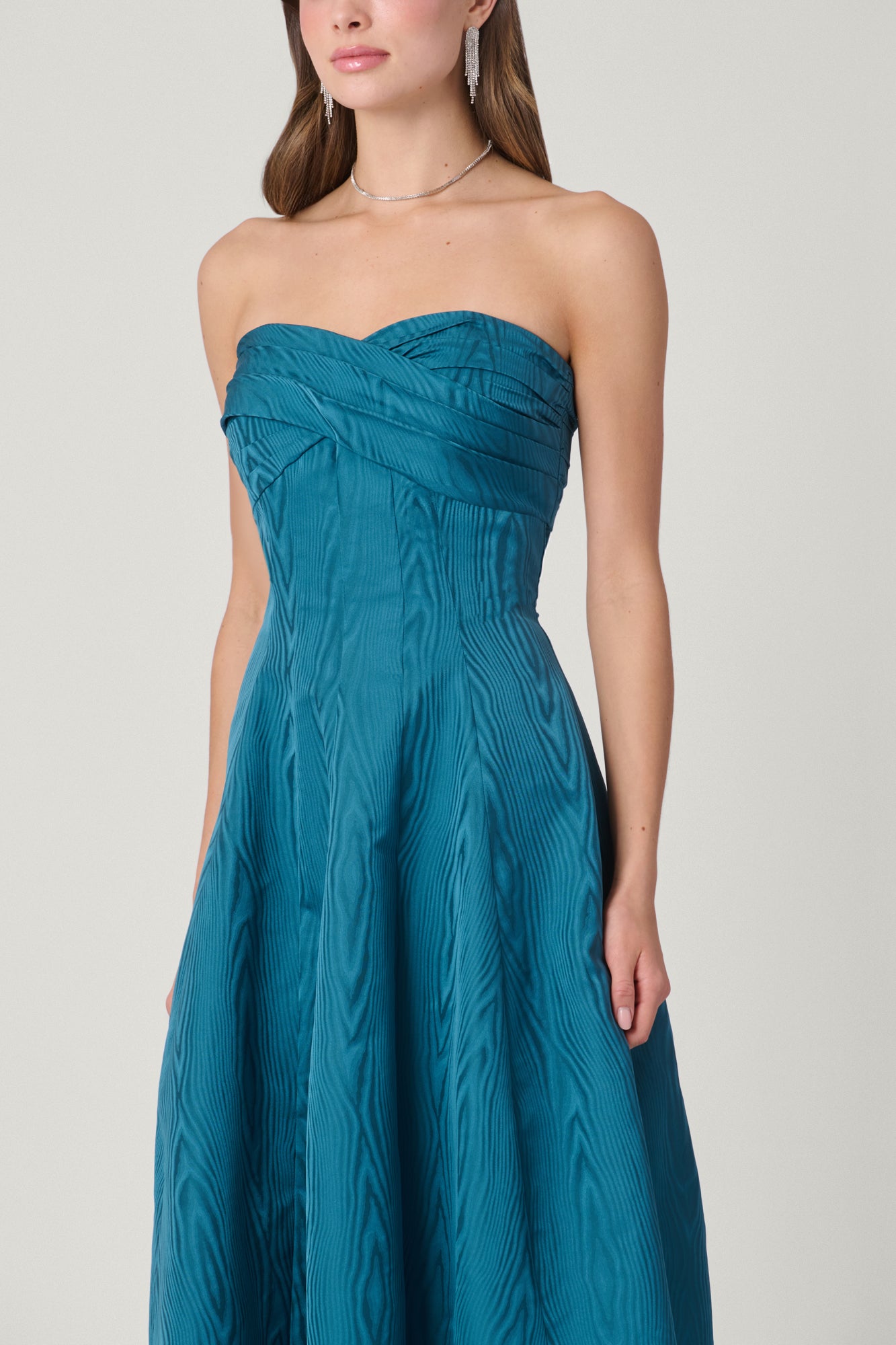
Midnight Crowley Dress in EmeraldOur Midnight Crowley dress is an elevated ankle-length silhouette in Mikado fabric, suited to galas and more formal cocktail events. |
Fabric and Length
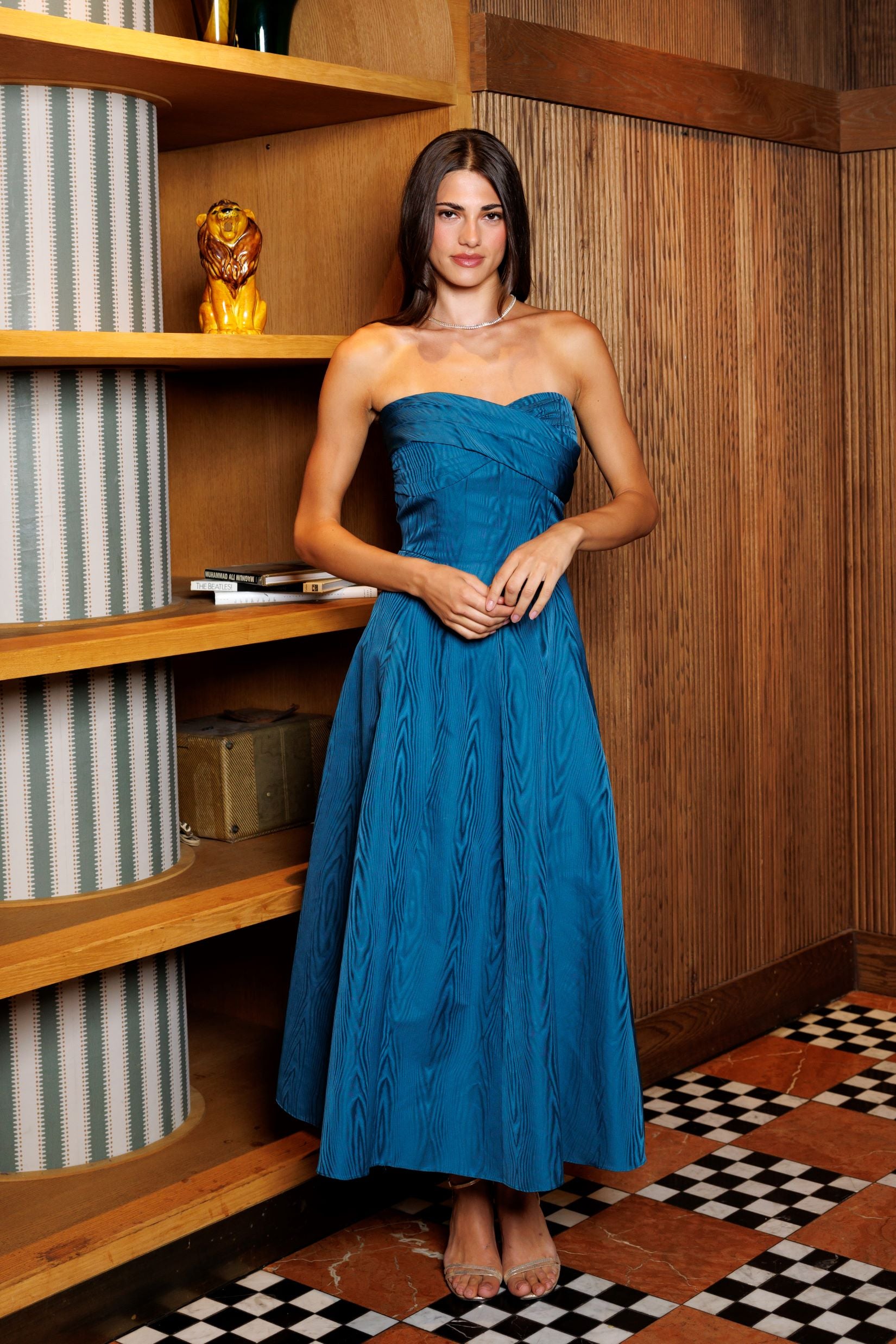
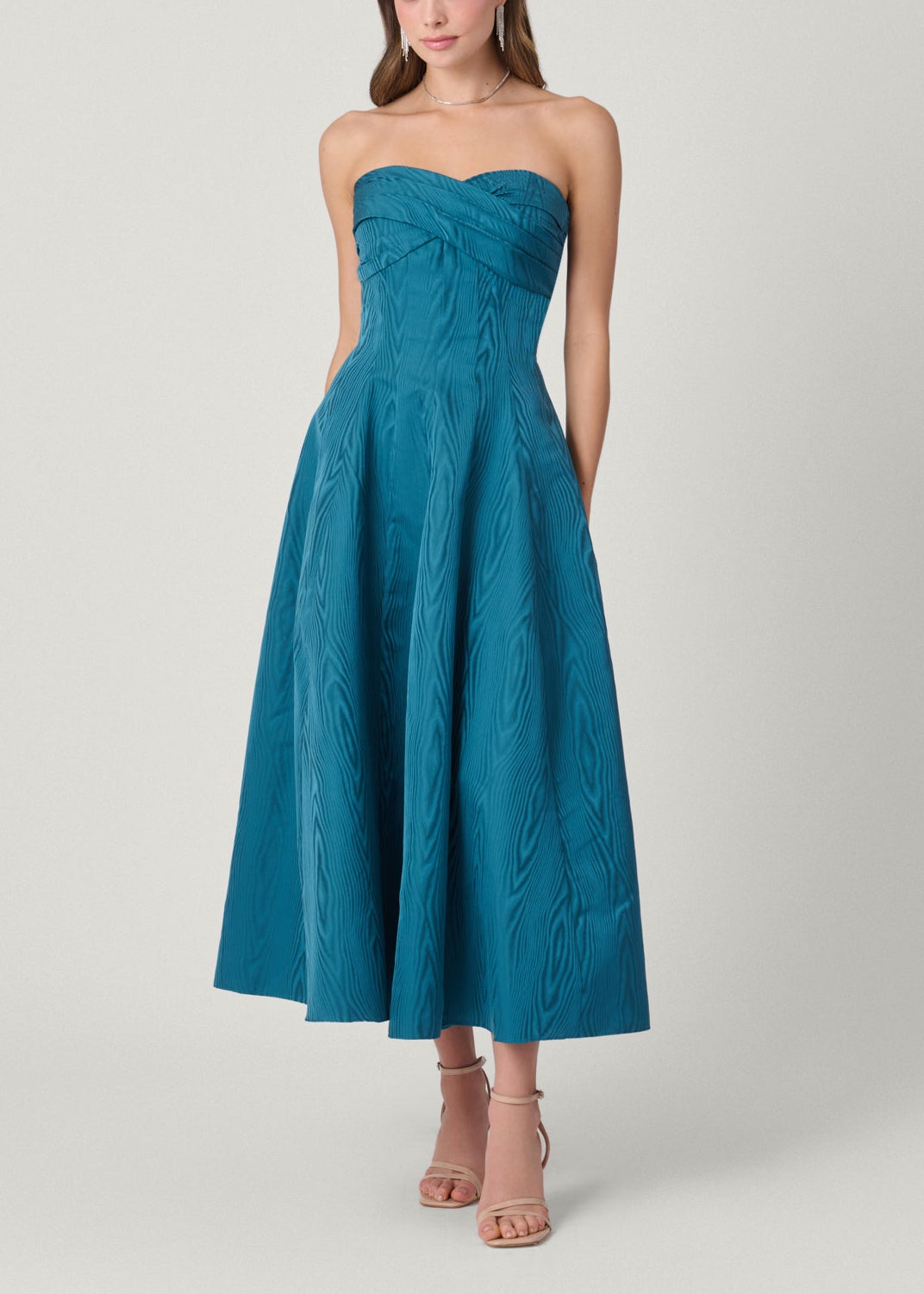
Fabric and length work together more than people realize. Knee-length to midi is the standard range for cocktail attire, but elegant ankle-length silhouettes in formal fabrics, Mikado, sequin, moiré, are appropriate for the more elevated end of the dress code, galas and charity events especially. That range covers what most examples of cocktail attire look like in practice. The distinction that matters is fabric and formality register, not hemline on its own. Elevated fabrics like satin, crepe, lace, velvet, Mikado, and sequin all work. Casual fabrics like cotton, denim, and jersey don't.
Colors
Color has some flexibility built in. Black is a reliable default for almost any cocktail event. Jewel tones, navy, and metallics all work too, and rich, deep colors tend to suit the register of the occasion better than pastels or brights. For a more elegant cocktail attire look, a single jewel tone or metallic often reads more intentional than a mix of colors. Overly casual prints and neon are worth avoiding unless the event specifically calls for something festive.
Shoes and Accessories
Shoes should lean dressy. A pointed or strappy heel is a standard choice, though block heels, dressy mules, and refined flats are all acceptable depending on the venue. Sandals, sneakers, and anything casual in construction are best left at home.
For accessories, keep it considered rather than layered. A structured clutch or small evening bag, plus drop earrings or one statement piece in gold or a jewel tone, is usually all a cocktail look needs.
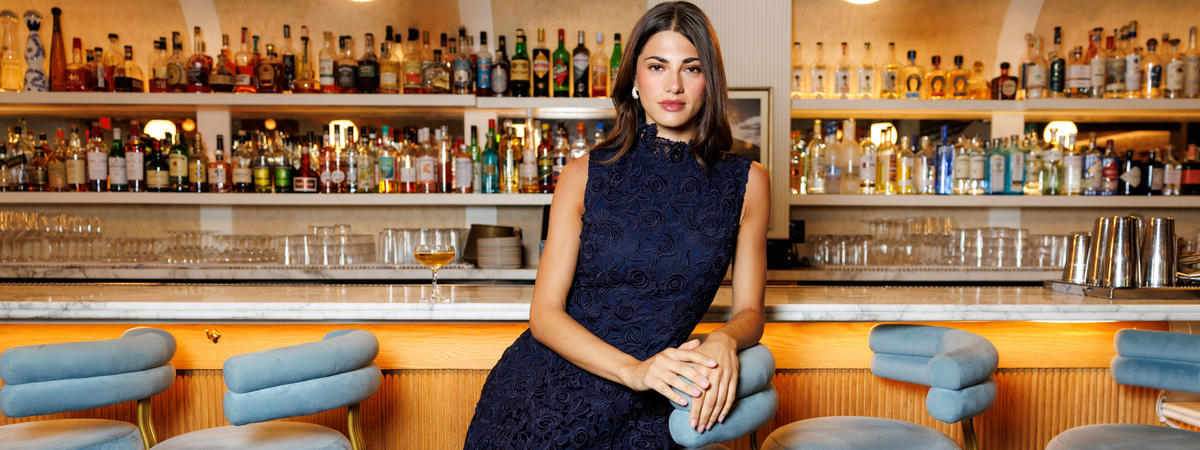
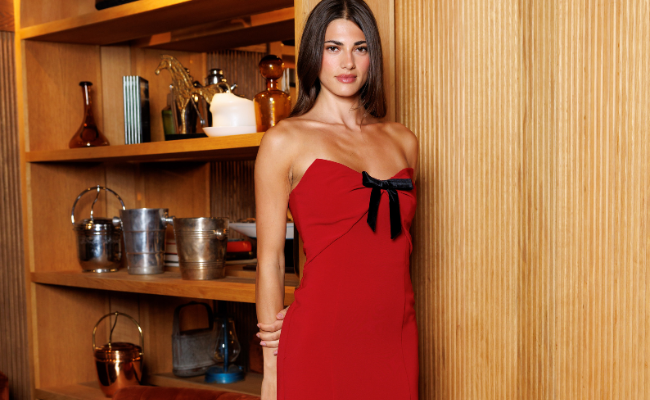
 Cocktail Attire Inspiration: Midnight Samantha Dress |
How is Cocktail Attire Different from Other Dress Codes?
Cocktail attire sits in the middle of the formality scale, which is exactly why it gets confused with the codes on either side of it. Semi-formal sits below it, black tie optional and black tie sit above it. Seeing them side by side, cocktail attire vs formal and semi-formal vs cocktail attire both get easier to sort out.
| Dress Code | What it Means | Typical Hemline | Fabric | Example |
| Semi-Formal | Put-together but relaxed, often daytime or early evening | Midi or tailored knee-length | Crepe, chiffon, knit | A tailored knee-length dress for an afternoon shower |
| Cocktail | Elevated and celebratory, without gown-level formality | Knee-length to midi (ankle-length for formal cocktail events) | Crepe, lace, velvet, satin, Mikado | A lace midi dress for a wedding reception |
| Black Tie Optional | Formal, with some flexibility in silhouette | Floor-length or ankle-length | Satin, lace, clip chiffon | An ankle-length gown for an evening gala |
| Black Tie | The most formal code, gown required | Floor-length | Satin, Mikado, moiré | A floor-length gown for a black-tie wedding |
The line between cocktail and semi-formal comes down to fabric and finish more than anything else. A knee-length dress in chiffon reads semi-formal. The same length in lace or velvet reads cocktail. The line between cocktail and black tie optional is a little more forgiving, since a formal ankle-length cocktail dress in Mikado can sometimes cover both, but a full-length gown always signals black tie territory.
If your invitation calls for black tie specifically, our guide to black-tie wedding dressing breaks down gowns and formal shoes in more detail.
What Not to Wear to a Cocktail Event
Cocktail attire mistakes tend to fall into a few familiar categories. Too casual is a common one. Jeans, sundresses, sneakers, anything that reads beach or resort, none of it belongs at an evening reception, even if the rest of the outfit is put together.
Too formal happens just as often. A full ball gown or a floor-length red carpet look overshoots the dress code. That level of formality belongs to black tie. Showing up in a gown to a cocktail party can feel just as out of place as showing up underdressed.
Overly revealing pieces work against the occasion too. Cocktail attire should feel polished, not like a night out. A neckline built for a club rarely translates well into a room full of coworkers or wedding guests.
One more thing worth watching for: trend-driven pieces. An extreme cutout or an ultra-viral silhouette can pull against the timeless feel cocktail attire is going for. Classic doesn't mean boring. It just means something that still looks right in five years.
Cocktail Attire by Occasion
The same dress code stretches to cover a lot of different rooms and knowing what shifts between them makes getting dressed a lot easier.
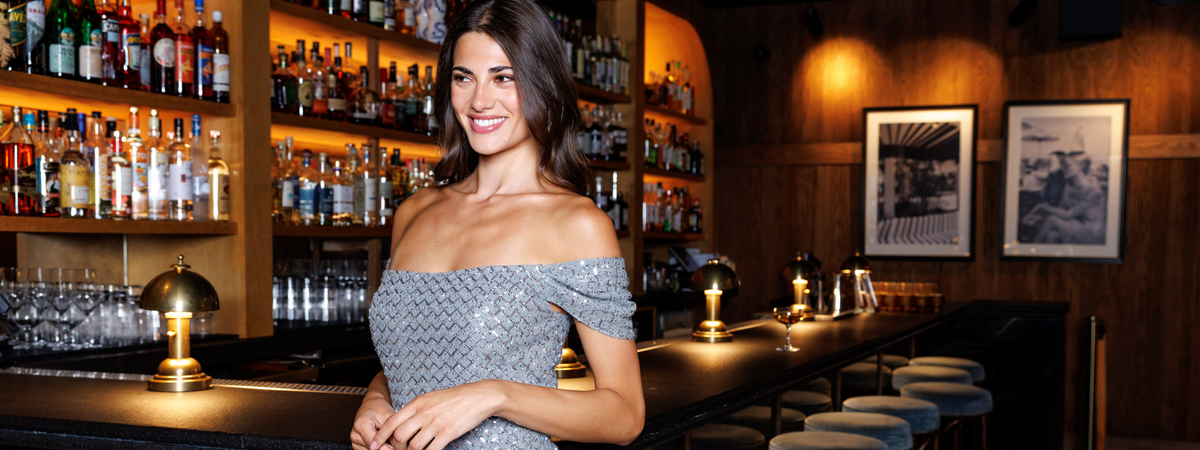
An evening gala or charity event sits at the formal end of cocktail attire. Venues tend to be grand, the lighting low, the whole evening built around making an entrance. This is where an ankle-length silhouette in Mikado or sequin earns its place, paired with a strappy heel and a statement piece of jewelry.
A daytime cocktail reception calls for something lighter. Natural light is less forgiving of heavy fabrics, and the energy of an afternoon event is more relaxed than a ballroom at night. A knee-length dress in crepe or lace, with a lower heel or a refined flat, fits the moment better than anything built for after dark.
Wedding receptions are the setting many people associate with cocktail attire, and it's the code you'll run into most often as a guest. A cocktail wedding dress code usually calls for the same knee-to-midi range covered throughout this guide. Our fall wedding guest guide goes deeper on how the season factors into that particular version of cocktail dressing.
Corporate and holiday dinners tend to land somewhere in the middle. Not as formal as a gala, not as relaxed as a daytime reception. A midi dress in a rich color, velvet in the winter months especially, hits that register well.
Season plays its own role on top of the occasion. September cocktail attire can lean into lighter fabrics and open shoes, since the weather usually still allows it. By November, velvet and a richer color palette start to feel more appropriate, and a closed-toe shoe becomes the more practical choice as evenings cool down.
Frequently Asked Questions
A few more questions come up often once the basics of cocktail attire are settled, mostly around specific edge cases like pants, shoes, and color.
What is considered cocktail attire?
Cocktail attire means a knee-length to midi dress, or an ankle-length option for more formal events, made in an elevated fabric like crepe, lace, or velvet. The overall feel should be celebratory without reaching gown-level formality.
Is a cocktail dress the same as a formal dress?
No. Cocktail attire sits below formal and black tie on the formality scale. A cocktail dress runs knee to midi, while a formal dress is typically floor-length. Hemline, fabric weight, and occasion all factor into the distinction.
Can you wear pants to a cocktail event?
Yes. A well-tailored wide-leg trouser paired with an elevated top, or a tailored jumpsuit, reads as cocktail attire just as well as a dress does. Fabric and finish matter more than the garment type itself.
What shoes work with cocktail attire?
A pointed or strappy heel is a standard choice. Block heels, dressy mules, and refined flats all work depending on the venue. Sandals, sneakers, and anything casual in construction are worth skipping.
Can you wear black to a cocktail event?
Yes, and it's a dependable choice. Black works especially well at evening events. Jewel tones, navy, and metallics are equally appropriate if you'd rather skip black altogether.